As organisations prepare for the next reporting cycle, climate risk can seem like just another box to tick. Yet the costs are rising fast: weather- and climate-related extremes have caused an estimated €270 billion in economic losses in the EU over the past five years alone, almost a third of all losses recorded since 1980.
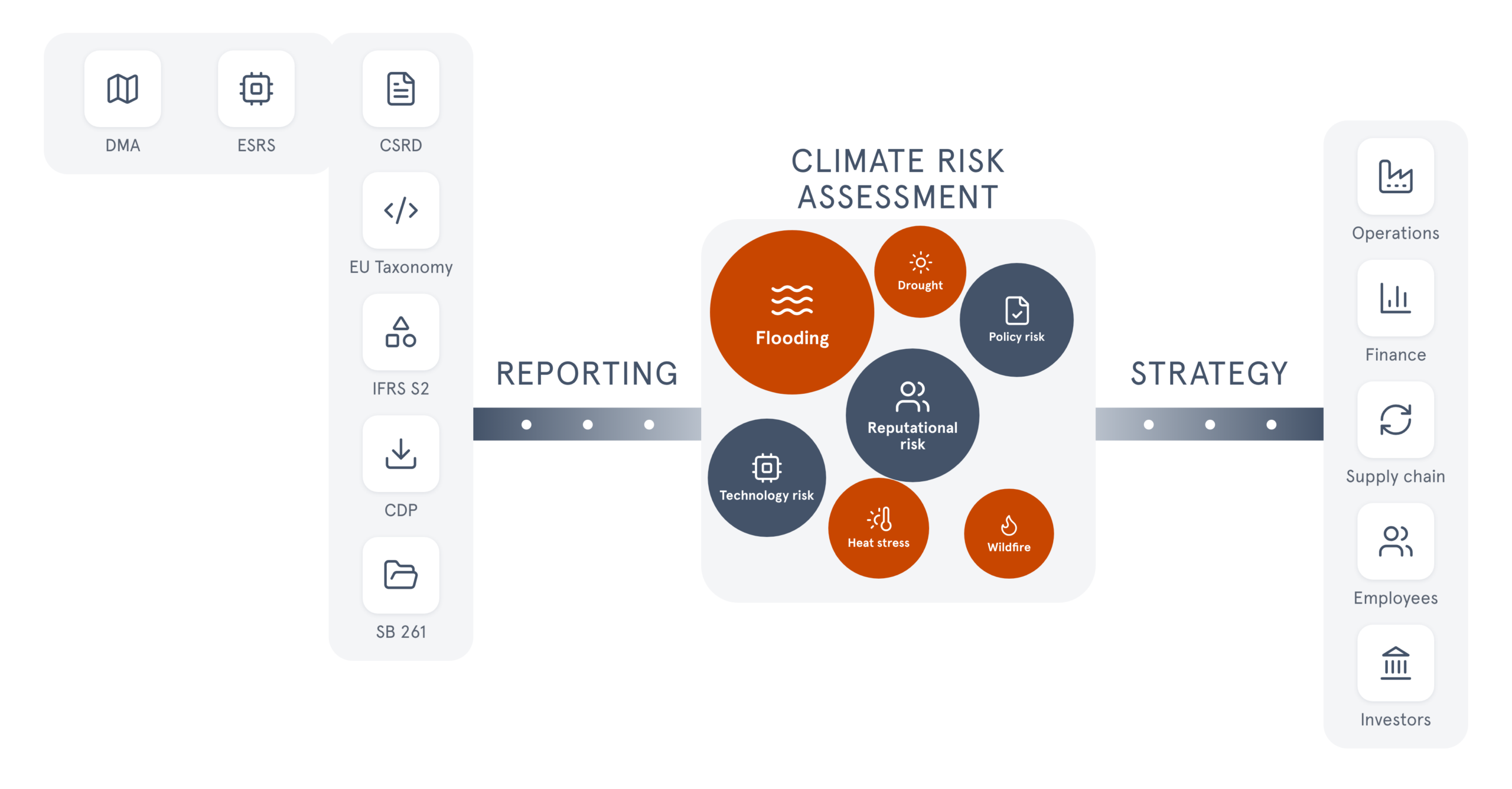
A meaningful climate risk assessment can help address reporting gaps and save time by providing rich input across several frameworks, from the double materiality assessment (DMA) to climate disclosures under the European Sustainability Reporting Standards (ESRS) and the EU Taxonomy.
The same outputs also help companies understand how climate change could affect their operations and financial position. In this article, our climate risk expert Freddie Baker unpacks how to efficiently use the outputs from your assessment and translate them into business decisions.
How one climate risk assessment can be used across several reporting framework
Applicable from the 2027 reporting year, the revised European Sustainability Reporting Standards (ESRS) require companies to disclose how they identify and assess climate-related risks (E1-2) and the results of their climate resilience analysis (E1-3), where climate change is material.
This can seem like a standalone project, but if done well, its outcomes can feed into and strengthen the wider sustainability statement.
Strengthen your DMA with financial climate risk data
The clearest example is the DMA. ESRS E1-11 requires quantitative data on the anticipated financial effects of material physical and transition risks, such as assets and net revenue at risk.
Reach out to our expert Freddie Baker to get started on climate risk – or go further
Here, the same climate risk data can be used directly in the DMA to provide more granular and detailed evidence when assessing the financial materiality of climate change.
Support EU Taxonomy and other climate disclosures
A climate risk assessment also supports companies reporting against the EU Taxonomy and its do no significant harm (DNSH) criteria.
The outputs can also support disclosures under other standards and initiatives, including CDP, the International Financial Reporting Standards (IFRS) S2 and California’s Senate Bill 261.
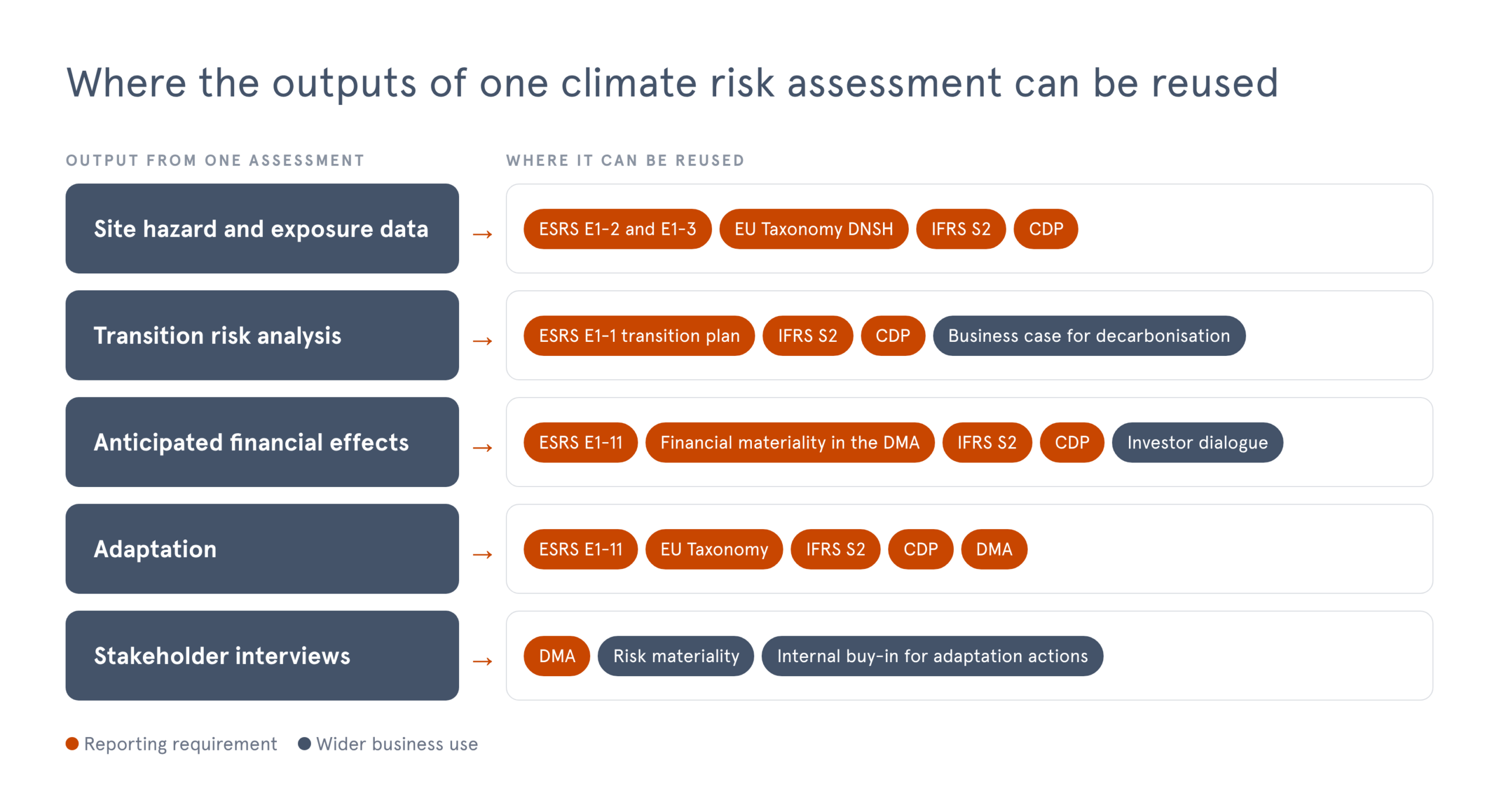
Collecting the data once helps ensure consistency across disclosures, makes audits easier and allows for one round of stakeholder engagement rather than several.
Translate climate risk findings into business decisions
Beyond reporting, the outcomes of a climate risk assessment provide insight into how climate change could disrupt business objectives and affect the balance sheet.
However, climate risks have different implications for different business functions. Making the findings useful therefore requires a slightly different lens on the results, translating them into the context and language of each relevant stakeholder.
- For the COO, relate the risks to potential production downtime.
- For the supply chain team, show where climate risks could cause sourcing delays.
- For the CFO, connect the findings to assets and revenue at risk.
- For investors, explain what the findings mean for the resilience of the strategy.
Making the most of the next reporting cycle
As organisations prepare for their 2027 reporting cycle, now is a good time to identify how your climate risk assessment can be put to use. Whether reviewing an existing assessment or preparing a new one, understanding where reporting requirements overlap can help save time, address compliance gaps and strengthen the evidence behind disclosures and the DMA.
The same findings can also help companies make better-informed decisions on how to manage climate-related risks by showing what these risks mean for different business functions.
Not sure where to start? We’d be happy to walk you through it. Get in touch with Nordic Sustainability to discuss how we could support your organisation.
A meaningful climate risk assessment can help address reporting gaps and save time by providing rich input across several frameworks.

How your climate risk assessment can support the 2027 reporting cycle
Want to learn more about how climate risk assessments can inform business decisions?
Author details
Freddie Baker
Associate Manager & Climate Risk Lead